What’s happening?
A Brisbane Magistrates Court matter has ended with almost $30,000 in fines over unlawful mud crab dealing.
Two people accused of fishing without a licence, along with a South Brisbane restaurant owner, were prosecuted under the Fisheries Act 1994.
Queensland Boating and Fisheries Patrol officers began investigating after they traced mud crab supply from unlicensed fishers to the restaurant.
The court fined one fisher $3,000 and the second $9,500. The restaurant owner received a $17,000 penalty.
Department of Primary Industries Deputy Director-General, Fisheries and Forestry, Pauline Jacob, said the outcome showed the law had force behind it.
“This strong compliance action is proof that our laws will be effectively enforced and that Queenslanders can be confident that wrongdoers will be caught and punished,” Ms Jacob said.
Why it matters?
The case highlights the risk illegal seafood poses to a tightly managed industry.
It also makes clear that liability does not stop with the person catching the product.
Businesses that buy unlawfully sourced seafood can also face serious punishment.
Ms Jacob said, “Nobody is above the law – it is illegal for recreational or unlicensed fishers to sell their catch, and restaurants will be held accountable for sourcing seafood unlawfully.”
She said this behaviour damages the wider sector.
“This type of activity undermines the sustainable management of our fisheries and disadvantages law-abiding commercial fishers,” she said.
Local Impact
For Brisbane, the prosecution puts fresh pressure on restaurants to check where seafood comes from before it reaches the menu.
It also gives diners another reason to question prices that seem unusually low.
Authorities say cheap seafood can sometimes point to unlawful supply.
The case is also important for legitimate operators who follow the rules and compete fairly.
By the numbers
- The total court penalty reached $29,500, made up of fines of $3,000, $9,500 and $17,000.
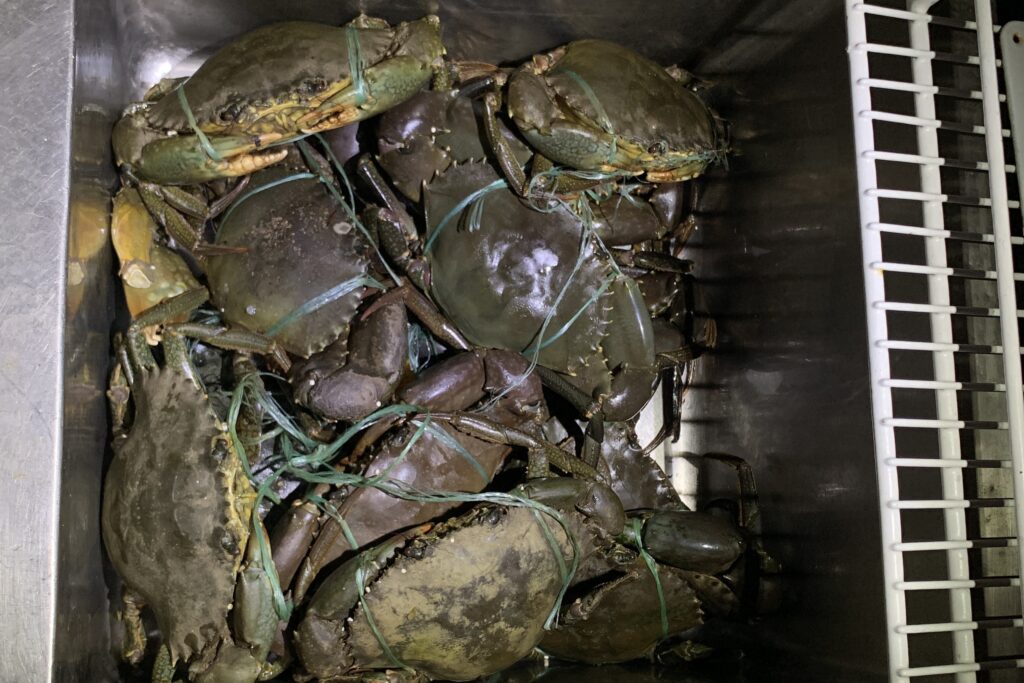
- Investigators found 48 mud crabs had been sold unlawfully during the operation.
- Officers also located two female mud crabs and two undersized barred javelin.
Zoom in
The prosecution followed targeted surveillance and search activity by Queensland Boating and Fisheries Patrol officers.
Material put before the court also referred to interference with another fisher’s mud crab pots.
That showed the case involved more than a simple unlawful transaction.
It pointed to conduct that affected both the fishery and other people working within the rules.
Zoom out
Queensland seafood has a strong name across the state and beyond, built on legal harvesting and careful management.
That standing supports jobs, businesses and visitor appeal in many coastal and regional areas.
Ms Jacob said consumers also had a part to play in protecting that standard.
“Informed consumers help support licensed fishers and protect Queensland’s reputation for premium, sustainable seafood,” Ms Jacob said.
The department said long-term fishery health depends on lawful and responsible sourcing across the whole chain.
What To Look For Next?
This prosecution is to keep seafood sourcing under close scrutiny in both the fishing and hospitality sectors.
It also sharpens the message that every part of the chain, from catch to kitchen, must meet the rules.
For consumers, questions around price and source may become a bigger part of how seafood is judged.