What’s Happening
As Minjerribah heads into its busiest time of year, Straddie Vet and the Minjerribah Wildlife Veterinary and Conservation Foundation (MWVCF) are asking residents and holidaymakers to keep an eye out for native animals over the holidays.
The holiday rush brings more cars, people and dogs to the island at a time when much of its wildlife is breeding and on the move. Koalas spend more time on the ground looking for mates, and young koalas leave their mothers to find a home of their own. Birds are nesting and raising young, including bush stone-curlews, which nest on the ground, and reptiles are more active in the warmer weather. All of that puts more animals in the path of cars and dogs.
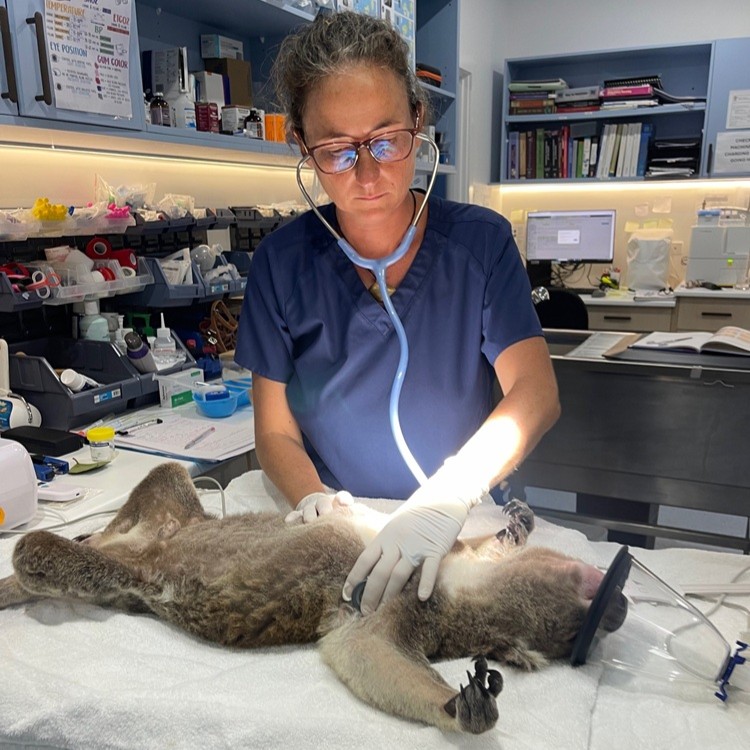
Straddie Vet’s 24/7 Koala and Wildlife Triage and Treatment Centre, supported by MWVCF, has cared for more than 200 animals from 25 species so far this year.
Why It Matters
Treating wildlife on the island means injured animals no longer need to make a long, stressful journey to the mainland, and can be released back on Country wherever possible.
For koalas, it matters even more. Minjerribah’s koala population is relatively healthy and isolated, and previously, koalas that left the island for treatment did not return. Being treated on the island is their way home.
A Way Home
RCM readers may remember Midyim and Nunka, the orphaned koala joeys who moved into an outdoor habitat earlier this year. When they returned to the bush in July, it marked the end of six months of care on the island. Volunteers built new rehabilitation enclosures for them, and the vet team looked after them around the clock until they were ready for life in the wild.
Their release site includes blue gums planted by Sibelco in the 1990s. Those trees now feed another generation of koalas.
What People Say
“The best rescue is the one that never has to happen,” said Straddie Vet’s Dr Jade Patterson. “Slowing down at dusk or keeping your dog on a lead can be the difference between an animal going home and never making it back.”
How It Works
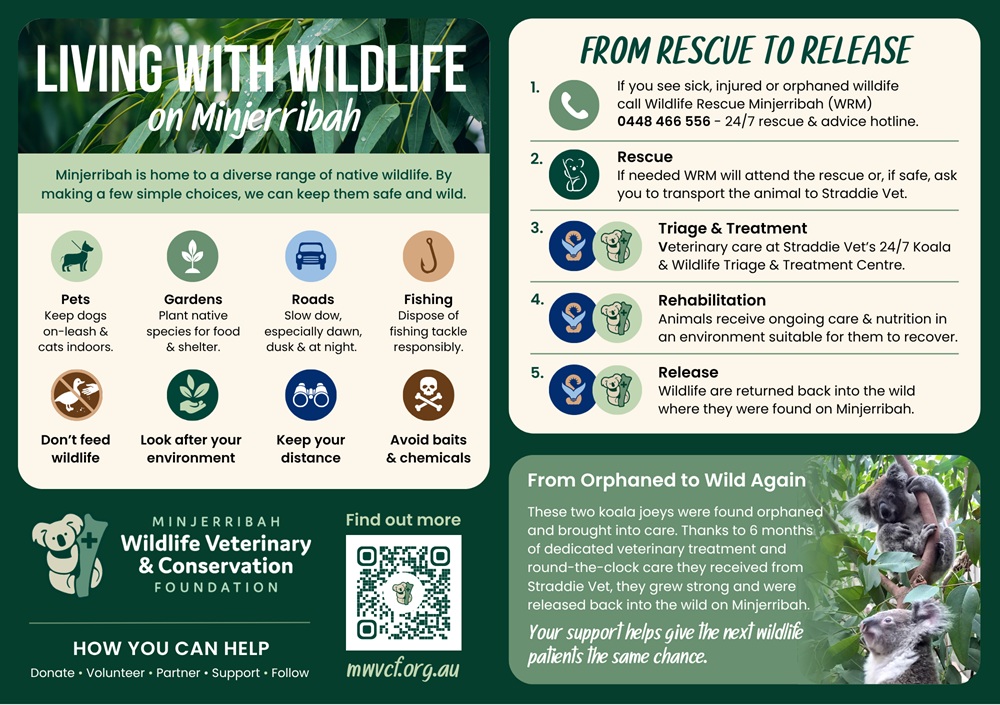
Volunteer group Wildlife Rescue Minjerribah (WRM) runs the island’s 24/7 rescue and advice hotline on 0448 466 556, and is the first call for sick, injured or orphaned wildlife. WRM will attend, or ask callers to bring the animal to Straddie Vet.
From there, the Triage and Treatment Centre provides a local pathway from emergency treatment through rehabilitation to release.
MWVCF, a registered charity established in January 2026, helps cover the vet and rehabilitation costs, which can reach $15,000 a month as patient numbers grow. It also invests in training, habitat and research.
Growing Care
For a koala in care, recovery depends on a steady supply of fresh, suitable leaves. Training has helped volunteers and rangers from Queensland Parks and Wildlife Service (QPWS) and the Quandamooka Yoolooburrabee Aboriginal Corporation (QYAC) identify and collect browse for animals in care.
During September’s Quandamooka Festival, MWVCF, QYAC and community volunteers planted more than 600 koala food trees at Ganaba. Grown from seed by Sibelco and the Gourmet Gumleaves Project, they will help feed koalas in care for years to come.
More than 40 people have attended koala and bird rescue workshops supported by Wildlife Rescue Queensland and QYAC, and a reptile and frog course followed in November. Each course adds to the island’s network of carers working under veterinary guidance.
By the Numbers
- 200+ animals cared for so far this year
- 25 species, from koalas and wallabies to birds and reptiles
- 600+ koala food trees planted at Ganaba
- 40+ participants in koala and bird rescue workshops
- Up to $15,000 a month to keep care running
How You Can Help This Summer
- Slow down on island roads, especially at dawn, dusk and night
- Keep dogs on leads and cats indoors
- Dispose of fishing line and hooks responsibly
- Give wildlife space, and let them find their own food so they stay wild
- Plant natives for food and shelter
- If you find sick, injured or orphaned wildlife, call WRM on 0448 466 556
What To Look For Next
As it approaches its first anniversary in January, MWVCF says community donations help cover the cost of round-the-clock care at the centre as patient numbers grow. Donations of $2 or more are tax-deductible and can be made at mwvcf.org.au