What’s Happening?
Redland City Council has carried out bushland rehabilitation in Sheldon to improve habitat connections for local koalas.
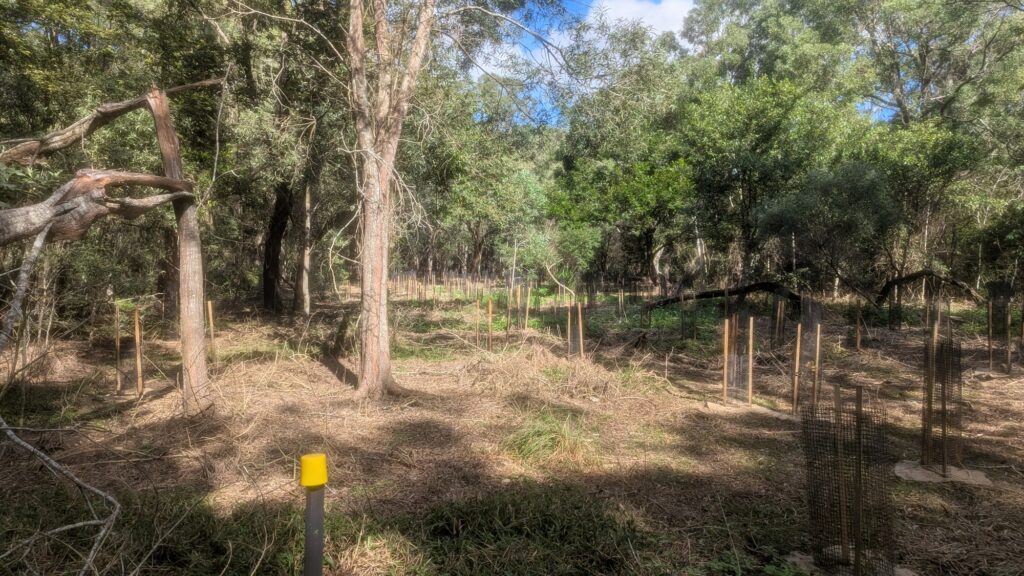
Council’s program combined extensive weed removal with native tree planting at Ford Road Conservation Area and Wallaby Creek Bushland Refuge. Together, these works will rebuild forest structure while creating more food, shelter and safe movement routes across the landscape.
Why It Matters?
Koalas need healthy, connected bushland to rest, feed and move safely. However, dense lantana and other invasive species can prevent native saplings from becoming established.
Without new growth, the ecosystem becomes less able to renew itself over time. By removing invasive plants, Council gives native species space to recover and rebuild the forest canopy.
The young eucalyptus trees can support koalas as they mature, while improving links between important habitat areas.
Local Impact
Both reserves provide important habitat within Sheldon, so improving their condition can support koalas across the local landscape. The work also protects natural spaces as nearby urban areas continue to grow.
Community care will matter while cleared areas regenerate and young trees establish. Division 9 Councillor Jason Colley asked visitors to follow access rules and give recovering habitat room.
“Members of the community can support this work by respecting restricted areas, staying on designated tracks, keeping dogs on a leash, and allowing regenerating areas to recover naturally,” Cr Colley said.
By the Numbers
- During the second stage, crews planted 500 young eucalyptus trees at Wallaby Creek Bushland Refuge.
- The first stage targeted extensive lantana growth, with some plants reaching up to three metres high.
- The project covered two sites, Ford Road Conservation Area and Wallaby Creek Bushland Refuge. Queensland lists both as Areas of Regional Koala Significance.
Zoom In
Council and Healthy Land & Water delivered the works through the Queensland Government-funded SEQ Restore & Reconnect: Koala Habitat program.
The Queensland Government Department of Environment, Tourism, Science and Innovation funded the program. Acting Mayor Julie Talty said the project would improve habitat connections while increasing food and shelter.
“The works were delivered in collaboration with Healthy Land & Water through the Queensland Government-funded SEQ Restore & Reconnect: Koala Habitat program,” Cr Talty said. “This partnership is a positive step forward in efforts to restore important koala habitat on Redlands Coast, but ongoing funding and maintenance will be required to completely restore these areas over time.”
Zoom Out
The rehabilitation forms part of a wider south-east Queensland effort to repair and reconnect koala habitat. Cr Talty said undisturbed bushland becomes more important as development expands around wildlife areas.
“As urban areas grow, these undisturbed natural spaces become increasingly important for wildlife to rest, feed and move safely,” she said.
What To Look For Next?
Council will continue rehabilitating both reserves as cleared areas regenerate and the new plantings become established.
“Council will continue restoration efforts through ongoing weed control, habitat monitoring and proactive fire management,” Cr Colley said.
Continued care, future funding and responsible public access can help both reserves recover. As the eucalyptus trees mature, they can provide more food and shelter while improving habitat connections.