What’s happening?
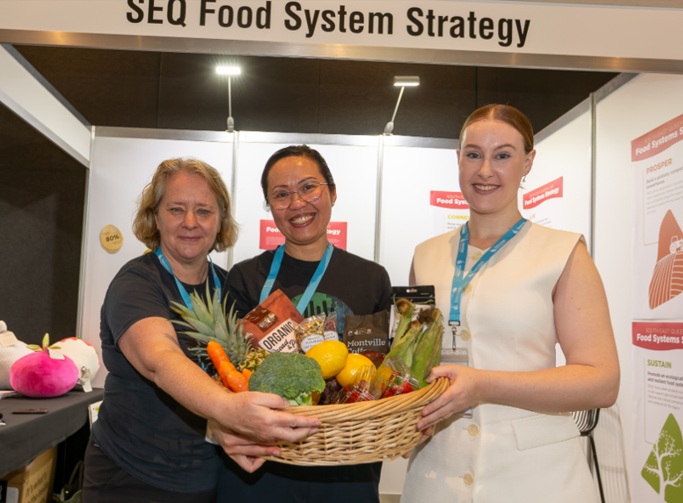
Commonwealth Scientific and Industrial Research Organisation (CSIRO) has released the South East Queensland Food System Strategy to help protect Australia’s future food supply.
The strategy was developed with the Council of Mayors, South East Queensland and regional stakeholders.
It calls for a “food bowl” approach across South East Queensland before the Brisbane 2032 Olympic and Paralympic Games.
Redland is one of the 11 local government areas included in the strategy.
Its local priorities include food technology, manufacturing, agritourism, artisan brands and stronger island supply chains.
Lead author and CSIRO scientist Dr Cathy Robinson said the plan moves away from fragmented planning.
“Achieving sustainable, resilient food goals can’t be achieved with a piecemeal approach,” said Dr Robinson.
“If Australia is to achieve reliable, affordable and sustainable food in the decades ahead, we need systems thinking where production, processing, transport, consumption and waste are planned together, not in isolation.”
Why it matters?
The strategy responds to climate volatility, population growth and fragile supply chains.
Dr Robinson said South East Queensland was a critical showcase.
“With the region’s population projected to exceed six million by 2046, pressure on land, water, infrastructure and supply chains will intensify and be compounded by global uncertainties and events such as the Games, which will place unprecedented demand on food supply and logistics,” Dr Robinson said.
“Feeding a growing region, and ensuring success for world events like the 2032 Games, won’t happen by accident.
“It requires deliberate collaboration across the whole food system, from farmers and manufacturers to retailers, councils and consumers.”
CSIRO co-author Dr Peggy Schrobback said food systems also support jobs, wellbeing and healthy food access.
“Even the most productive regions are vulnerable if supply chains falter or planning is misaligned.”
By the numbers
The Redland insights show how local food, land and island access connect.
- Redland’s population is expected to grow from 170,225 in 2024 to 183,649 in 2046.
- Redland’s gross value of agricultural production is $145 million, led by poultry at $77.8 million and nurseries at $58 million.
- Other key outputs include lettuce at $4.4 million, eggs at $2.1 million and livestock products at $2.1 million.
- Redland has 183 agricultural businesses, and 66 per cent have turnover below $250,000.
- About 18 per cent of Redland land use is conservation land, while 5 per cent is zoned agricultural.
- Redland has about 335 kilometres of coastline and six inhabited islands.
Zoom In
The Redland section identifies several local pressures.
These include population growth, land use changes and zoning across urban and conservation areas.
It also highlights the need to support island communities.
Extreme events can affect food access, affordability, storage and safety.
The strategy also points to local opportunities.
These include coastal food environments, nature tourism, local food experiences, aquaculture and fisheries.
Trade and export opportunities with international delegations are also listed.
Local Impact
Redland’s inclusion is important because the strategy recognises its mainland and island needs.
Local and island supply chains can be disrupted by natural events and urban pressures.
Extreme weather can cause power outages, food access issues and storage problems on the islands.
The Event-Specific Recovery Action Plan for Tropical Cyclone Alfred, released in June 2025, highlights these risks.
It points to waste management, emergency food distribution and support for isolated areas.
During the event, some residents ran out of food or could not cook due to extended power outages.
There was also limited butane gas on the islands.
Power outages and flooding also caused surplus food waste and food safety concerns.
Local markets help support Redland’s food identity.
These include Cleveland Markets, Redlands Coast Collective Markets and island, eco and twilight markets.
Events such as the Straddie Oyster Festival and Eco Markets also support local food and artisan businesses.
Zoom Out
The strategy covers Brisbane, Ipswich, Lockyer Valley, Logan, Moreton Bay, Noosa, Redland, Scenic Rim, Somerset, Sunshine Coast and Toowoomba.
It also offers a model for other regions where food is produced or manufactured.
Council of Mayors South East Queensland Chair Lord Mayor Adrian Schrinner said planning must begin now.
“When people in South East Queensland can easily get fresh food, they’re not just eating well, they’re enjoying the health, jobs and economic benefits that come with it,” Cr Schrinner said.
“We have an incredible opportunity to serve up the best of South East Queensland to the world with Brisbane 2032 on our doorstep, but planning needs to start now to make it happen.
“We can’t solve these challenges alone, so strong partnerships with other levels of government and industry are critical to make sure our food system is ready for the future.”
Redland Food Lens
The strategy links with Our Future Redland City: Corporate Plan 2026-2031.
The plan encourages the community to buy green, grow food and plant natives.
Local examples include FlyFarm, Wellington Point Farmhouse, Farmers2Founders and Redlands IndigiScapes Centre.
FlyFarm upcycles organic waste into insect protein for animal feed through a highly automated vertical insect farm.
Wellington Point Farmhouse offers farm-gate, direct-to-consumer experiences on historic farmland.
Farmers2Founders supports agrifood innovation and new agricultural technology ventures.
Redlands IndigiScapes Centre sits on 14.5 hectares of bushland.
Its IndigiCafe serves locally inspired food and drinks using native ingredients.
The centre also has a bush tucker trail and a native nursery.
What To Look For Next?
CSIRO’s strategy sets a clearer food planning direction before Brisbane 2032.
For Redland, the focus is likely to stay on island food access, emergency supply planning and local food businesses.
Food technology, manufacturing, agritourism and fisheries will also remain part of the wider regional conversation.